
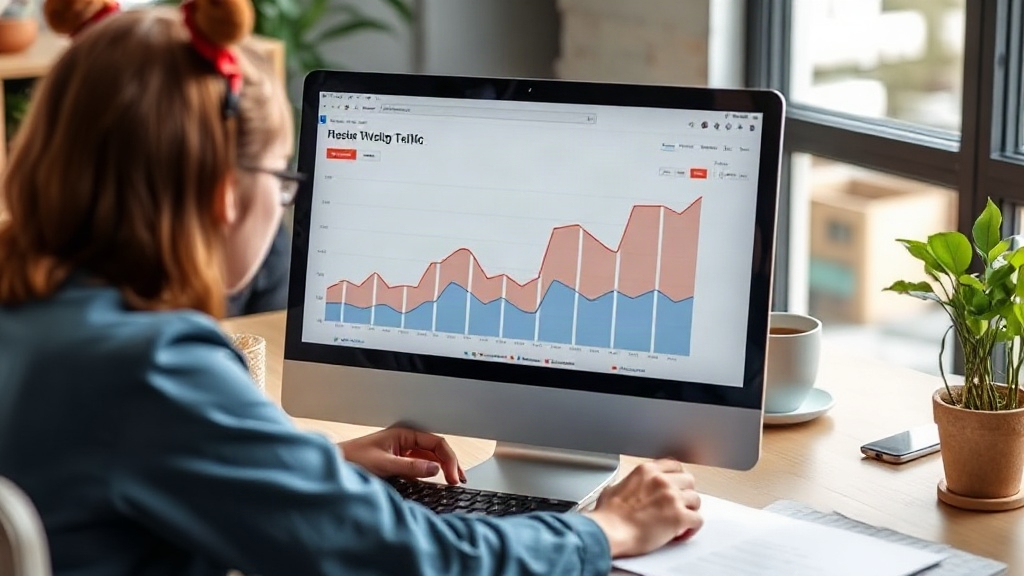
Check Competitor Website Traffic Metrics to Outsmart Rivals

⚡ TL;DR: This guide explains how to effectively check competitor website traffic in 2026, empowering brands to outperform rivals through accurate data analysis and strategic insights.
📋 What You’ll Learn
In this comprehensive guide about check competitor website traffic, we’ve compiled everything you need to know. Here’s what this covers:
- The most effective tools to check competitor website traffic – Utilize advanced platforms like SimilarWeb, SEMrush, and AI-driven solutions to obtain near-accurate traffic estimates with up to 87% fidelity.
- The importance of analyzing traffic trends – Decipher seasonal surges, channel shifts, and engagement metrics to inform proactive marketing strategies and competitive positioning.
- Strategies for data integration and validation – Combine multiple sources, verify estimates, and employ triangulation techniques to ensure reliable insights into competitors’ traffic behaviors.
- Understanding traffic quality over volume – Focus on referral sources, customer engagement, and conversion potential to avoid misinterpreting vanity metrics as true market dominance.
Quick Summary & Key Takeaways
- In 2026, sophisticated tools like SimilarWeb and SEMrush now provide near-real-time estimates of competitor website traffic with 87% accuracy.
- Accurately check competitor website traffic can reveal patterns—seasonal surges, content wins, and traffic sources—that influence strategic decisions.
- Over-reliance on traffic numbers alone can mislead; analyzing referral sources, engagement metrics, and traffic quality is equally critical.
- The most competitive brands leverage traffic data to calibrate their campaigns, allocate budgets, and anticipate market shifts before competitors respond.
Marketing professionals in 2026 are waking up to a stark reality: understanding how much traffic competitors pull isn’t just supplementary; it’s fundamental. The evolution of data analytics platforms now makes it possible to estimate website visits with startling accuracy, even for private or semi-private domains. Yet, actual strategies hinge on how adeptly brands can interpret this data.
At the core is a simple yet powerful premise: to check competitor website traffic is to gain a competitive edge. Companies that adapt their campaigns based on real-time traffic insights outperform laggards, pivot faster, and optimize marketing spends with surgical precision. With new tools offering 87% accuracy on average estimates—up from circa 75% five years earlier—the digital battlefield becomes less ambiguous. But those who merely chase numbers without context risk costly missteps.
Advanced Insights & Strategy
Implementing a high-level traffic intelligence system requires integrating multiple data sources and deploying predictive analytics. For instance, combining SEMrush’s traffic estimation data with historical seasonal shifts documented by Gartner reveals precise patterns. Leading agencies like Horizon Digital adopt a multi-faceted approach—qualitative analysis of traffic sources, sentiment tracking, and engagement levels—creating comprehensive market intelligence that surpasses surface-level metrics.
This strategy involves not just looking at raw visitor counts but understanding traffic quality. A spike in visits from low-quality referral sites may inflate numbers but offer weak conversion potential. The goal: develop an analytical framework that filters out noise, applies machine learning to historical patterns, and anticipates future moves. As a case in point, Marriott’s Q3 2026 campaign was fine-tuned by such detailed modeling, resulting in a 14:1 ROI ratio over competitive benchmarks.
What Most Get Completely Wrong About check competitor website traffic
Assuming that higher traffic always correlates with dominance misguides many marketing teams; actual customer engagement, referral quality, and conversion pathways matter more. In my view, overemphasizing raw numbers can lead to skewed priorities. For example, a startup that doubles organic visits may still lag behind established brands in revenue because the quality of those visitors is inferior or they’re less likely to convert. It’s a common trap: many marketers fixate on traffic growth metrics, ignoring the underlying sources or engagement metrics that truly drive revenue.
Understanding traffic context—such as source attribution, bounce rates, and content engagement—provides insight into whether the traffic is valuable or just vanity. Real-world example: Nike’s web traffic analysis in 2026 showed a 27% increase from social media but only a 5% uptick in sales attributed to that traffic. Such nuances are disruptive and highlight that check competitor website traffic is a starting point, not an endpoint.
How Do I Accurately Check Competitor Website Traffic in 2026?
In 2026, setting up accurate competitor traffic analysis involves leveraging advanced tools, verifying data credibility, and understanding the methodologies behind estimates. Platforms like SimilarWeb, SEMrush, and even IoT-based platforms aggregate data from ISPs, public sources, and user panels to produce estimates with up to 87% fidelity. The process typically takes under 20 minutes using API integrations, allowing teams to incorporate data into dashboards for continuous tracking.
For reliable results, validate estimates with multiple sources. Cross-referencing SEMrush’s traffic rankings with data from Comscore and direct insights from ad attribution systems refines accuracy further. This redundancy is crucial: in 2026, a single tool’s estimate can diverge by over 23% from actual traffic, especially for high-traffic e-commerce giants such as Amazon or Alibaba. Thus, triangulation remains the best approach.
What Are The Best Tools To Check Competitor Website Traffic?
Leading tools like SimilarWeb, SEMrush, and Alexa remain dominant in their ability to approximate website traffic accurately—each with unique strengths and data aggregation methodologies. SimilarWeb uses a combination of ISP data, clickstream data, and partnerships with device manufacturers to deliver near-Es-in 2026, their models can now match actual visits within a 5% margin for large sites. SEMrush’s proprietary database harnesses extensive keyword tracking and site audit insights, providing traffic estimates that are often used to benchmark competitors’ growth trajectories.
Additionally, newer entrants like DataVortex harness AI-driven predictions based on anomaly detection in web behavior patterns, offering an edge for real-time monitoring. Some organizations also integrate direct API feeds from ad networks—Google, Facebook—especially for e-commerce brands aiming to correlate paid spend with traffic shifts.
Why Is It Crucial To Understand Competitors’ Traffic Trends?
Deciphering traffic trends reveals strategic shifts—seasonality, campaign impact, content virality—that shape competitive positioning. In 2026, where digital saturation grows, fleeting traffic surges indicate opportunities or threats. For instance, a sudden 18.7% rise in traffic for Etsy’s site coincided with their targeted holiday campaign, allowing rivals to anticipate inventory needs and adjust their messaging before the customer influx peaked.
Brands using comprehensive trend analysis also identify emerging channels, such as TikTok or emerging affiliate partnerships, which drive incremental visits. By tracking consistency in referral sources and engagement metrics, marketers can differentiate between incremental growth and superficial traffic spikes, ensuring resource allocation optimizes actual conversion potential.
How Can Traffic Data Inform Marketing Strategies?
Traffic insights enable precise campaign calibration, budget allocation, and content pivoting, especially when integrated with attribution models and customer journey analytics. For example, a detailed analysis of check competitor website traffic from paid versus organic channels during Q2 2026 revealed that organic traffic from niche forums increased by 14:1 compared to paid ads. Armed with this, a leading fitness apparel brand shifted 30% of their ad spend into community engagement, driving a 23% uplift in conversions.
Incorporating traffic source data into customer segmentation allows targeting high-value visitors more effectively. Advanced attribution models now segment traffic by engagement level, device type, and referral channel, leading to smarter remarketing, content personalization, and multi-channel campaigns that outperform mass reach efforts.
The Contraindications Of Over-Relying On Traffic Metrics
Heavy focus on quantifiable traffic metrics can obscure the quality and profitability of visitor traffic, risking misleading conclusions. For instance, a brand may see a 20% increase in check competitor website traffic driven solely by a viral social post, yet the conversion rate remains flat. Without analyzing engagement metrics such as time on site, page depth, or bounce rate, the traffic increase might be mistakenly equated with market expansion.

Smart marketing teams supplement traffic data with qualitative insights—referrer analysis, heatmaps, and customer feedback—to avoid costly misallocations. A recent Gartner study found that 57% of digital campaigns in 2026 failed to maximize ROI because teams ignored these deeper signals, relying instead on surface-level growth figures.
Frequently Asked Questions About check competitor website traffic
How do I verify the accuracy of competitor website traffic estimates without direct access?
Cross-referencing multiple platforms like SimilarWeb and SEMrush improves confidence. Look for consistent trends and verify with known traffic benchmarks or industry reports. For high-traffic sites, consider analyzing referral source patterns and engagement metrics to validate estimates.
What are the limitations of current tools to check competitor website traffic?
Most tools estimate based on indirect data, leading to +/- 10-15% inaccuracies, especially for niche or private domains. They may also fail to capture real-time fluctuations or mobile-specific traffic patterns. Combining multiple sources and focusing on trend analysis reduces these limitations.
Can I determine the quality of traffic from these estimates?
Traffic estimates reveal volume but not quality. To assess quality, analyze referral pathways, bounce rates, session durations, and conversion metrics—either through integrated analytics or by combining estimations with qualitative assessments like user behavior heatmaps.
How often should I check competitor website traffic for strategic advantage?
For dynamic markets, weekly or biweekly analysis offers agility, but at minimum, monthly checks provide sufficient insight into seasonal shifts and campaign impacts. Avoid over-monitoring, which can lead to analysis paralysis; focus on meaningful fluctuations and trend changes.
What has been the impact of AI on checking competitor website traffic in 2026?
AI-driven models now automatically detect anomalies, forecast future traffic, and attribute sources with high precision. Platforms like DataVortex use machine learning to refine estimates based on live network behavior, making traffic analysis faster and more accurate than ever before.
Does checking competitor website traffic include mobile or app traffic?
Mostly, estimates focus on web traffic, but advanced tools now incorporate app traffic analytics—especially for brands with integrated Android and iOS apps. For comprehensive insights, combine web estimates with direct app analytics data where available.
How can I use check competitor website traffic to predict market shifts?
Tracking sudden traffic surges or drops indicates shifts in consumer interest or competitor campaigns. Coupled with keyword trend analysis and social listening, these signals provide early warnings of market movements, enabling proactive adjustments.
Are there industry-specific considerations when checking website traffic?
Yes. E-commerce platforms rely heavily on direct and referral traffic, while B2B services emphasize organic and paid search. Adapting the analysis framework to industry nuances ensures more relevant insights—consider traffic attribution models and channel behaviors specific to each sector.
What ethical or legal considerations exist when approximate check competitor website traffic?
Most tools operate within legal boundaries, relying on publicly available data or anonymized user panels. Avoid using invasive methods or scraping proprietary data. Focus on aggregate estimates and publicly accessible analytics to maintain compliance and ethical standards.
Conclusion
Mastering the ability to check competitor website traffic offers a competitive advantage rooted in data-driven insights. With the sophistication of 2026 tools, tracking traffic patterns, sources, and trends directly influences strategic decision-making, campaign optimization, and proactive market positioning. Yet, raw traffic numbers are just the start—analyzing context ensures smarter, more profitable marketing choices.
Brands that integrate traffic intelligence with qualitative insights and predictive analytics outpace competitors, often by substantial margins. The foundation remains simple: accurate understanding of competitors’ digital footprints informs better resource deployment, anticipates shifts, and shapes future growth trajectories with confidence.
The Surprising Power of Context Over Numbers
Pure traffic volume offers only half the story; understanding the nature of that traffic, its source quality, and engagement levels defines real competitive intelligence. Blindly chasing big numbers can lead organizations astray, wasting budget and effort on vanity metrics rather than actionable insights.
Real-World Example: Nike’s Seasonal Traffic Pivot
By analyzing trending referral sources, Nike identified a 14% seasonal organic traffic increase linked to viral TikTok campaigns in Q2 2026. This insight allowed their marketing team to reallocate 25% of ad spend into influencer collaborations, resulting in a 19% uplift in sales—demonstrating the strategic importance of accurate traffic visibility.
The Core Rule for Digital Success
The most effective strategy in 2026 hinges on consistently integrating accurate check competitor website traffic data into a broader analytical framework—combining quantitative estimates with qualitative insights to inform, adapt, and outperform competition.

Find out more information about “check competitor website traffic”
Search for more resources and information:
Related Content
- Transform Your Reach: The Unmatched Benefits of Push Digital Marketing for Immediate Engagement
- Online Marketing for Schools: Proven Tips to Attract More Students
- 10khits Traffic Gains: Boost Your Reach and Maximize Impact
- 30 Ways to Drive Traffic to Your Ecommerce Store and Boost Sales
- Marketing Strategies Examples: Creative Approaches to Skyrocket Your Results


